


What Is the Difference Between 12mm and 19mm Plywood?
Author
Area Manager, Servicing
After Sales servicing experience in building materials, Industry experience of 9 years
Read full bio →Updated:
The visible difference is 7mm. The practical difference is what each sheet can do in a furniture design.
A 12mm sheet may be suitable for a supported partition or drawer side. A 19mm sheet is commonly chosen for main structures, shutters and components that carry more weight. But thickness is only one part of the decision. A long shelf still needs adequate support, and a thick sheet against a damp wall still needs the right plywood grade.
12mm vs 19mm Plywood: Quick Comparison
| Feature | 12mm plywood | 19mm plywood |
|---|---|---|
| Weight | Lighter | Heavier |
| Rigidity, when quality and grade are comparable | More likely to flex over a long span | Generally more rigid |
| Typical role | Supported internal or secondary components | Main structures and load-bearing components |
| Hardware fixing | Requires careful choice of screws and fittings | Offers more material for suitable fixings |
| Cost per sheet | Generally lower | Generally higher |
| Common uses | Partitions, drawer sides, short supported shelves | Wardrobe structures, cabinet bodies, bed components and shutters |
The grade must be selected separately from the thickness. FlaerPly recommends Marine Grade IS 710 BWP plywood for moisture-prone areas and furniture against damp walls. For heavy furniture and storage in dry areas, its recommendation is IS 303 BWP plywood.
Where Does 12mm Plywood Work?
12mm plywood is often considered for parts that carry lighter loads or have support close to them, such as:
- Drawer sides
- Internal partitions
- Short, supported shelves
- Small storage compartments
- Decorative panels
Do not choose 12mm solely because a component is hidden inside the furniture. Check its height, span, load and method of fixing. A tall partition or a shelf holding heavy items may need a different design or a thicker sheet.
Where Does 19mm Plywood Work?
19mm plywood is commonly considered for:
- Wardrobe side panels and shutters
- Kitchen cabinet structures
- Bed and storage components
- Tables and desks
- Heavily loaded shelves
- Panels that hold frequently used hardware
Its extra thickness generally adds rigidity and gives suitable screws more material to grip. It does not remove the need for a sound frame, correctly spaced supports and well-made joints.
Which Thickness Should You Use for Each Furniture Part?
| Furniture component | Starting point | What could change the choice? |
|---|---|---|
| Wardrobe outer structure | 19mm | Wardrobe size, joinery and internal supports |
| Wardrobe partition | 12mm or 19mm | Panel height and whether it supports shelves |
| Short, lightly loaded shelf | 12mm may work | Load and support on its edges |
| Long or heavily loaded shelf | 19mm, with suitable support | Span and expected long-term load |
| Kitchen cabinet structure | 19mm is commonly used | Cabinet design and hardware |
| Drawer side | 12mm may work | Drawer size, load and runners |
| Bed component carrying weight | 19mm is commonly considered | Frame design and distance between supports |
| Decorative panel | 12mm may work | How it is fixed and whether it carries a load |
| Furniture back panel | Often thinner than 12mm | Whether the back also braces the unit |
These are planning starting points, not a substitute for a carpenter’s component-by-component specification.
Wardrobes: Think About Both Shelves and Walls
A 19mm wardrobe side panel may be a reasonable structural choice. A supported internal partition may work at 12mm. A wide shelf holding luggage, however, could still sag even if it is 19mm thick; shortening the span or adding a support may matter more.
The wall behind the wardrobe determines the grade. For a wardrobe against a dry interior wall, FlaerPly recommends IS 303 BWP plywood. If it is against a damp wall, an external wall with moisture concerns, or a wall adjoining a kitchen, bathroom or balcony, choose Marine Grade IS 710 BWP plywood, such as FlaerPly Smart 710.
Kitchens: Choose IS 710 BWP Before Settling Thickness
A kitchen cabinet may use 19mm plywood for its structure and a different thickness for other components. Whatever thickness the design calls for, FlaerPly recommends Marine Grade IS 710 BWP plywood throughout the kitchen, including overhead cabinets.
FlaerPly Smart 710 is FlaerPly’s default recommendation for Indian homes. Its product specifications list it as IS 710 BWP. Cut edges and openings around plumbing also need to be sealed during installation. flaerply.com
Beds: The Frame Matters as Much as the Sheet
19mm plywood is commonly considered for load-bearing bed components. Yet a large panel with too few supports can flex over time. Ask how the bed frame will support the plywood and how the joints will be fixed.
For beds and heavy storage in dry areas, FlaerPly recommends IS 303 BWP plywood. Where a headboard or storage structure touches a wall affected by dampness, use Marine Grade IS 710 BWP plywood for the exposed components.
Does 19mm Plywood Hold Screws Better?
When the plywood construction is comparable, a 19mm sheet provides more depth for an appropriate screw than a 12mm sheet. That can be helpful for hinges, drawer channels and frequently used fittings.
More thickness does not make every joint stronger by itself. Screw size, placement, the plywood’s internal construction and the direction in which the fitting is loaded all matter. The hardware should be selected for the actual panel thickness.
FlaerPly Products to Consider
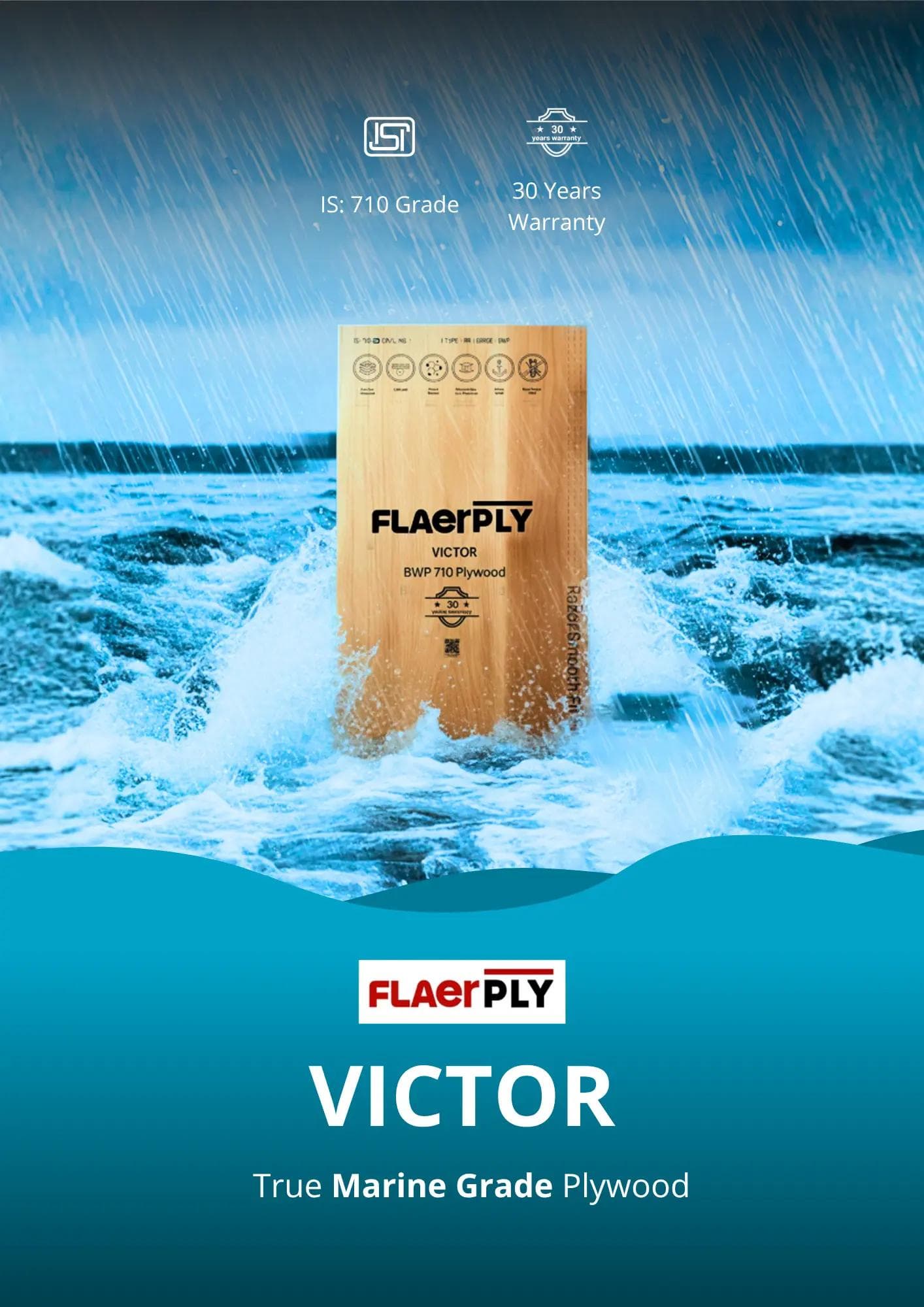
For its default IS 710 BWP home recommendation, FlaerPly points to Smart 710. Where construction conditions or termite exposure warrant a more cautious marine-grade selection, it recommends considering FlaerPly Victor or FlaerPly Platinum. Check the available thicknesses for the selected product before finalising a cutting list. These linked product pages list the products as IS 710 BWP. flaerply.com
Conclusion
Choose 12mm or 19mm plywood according to the job each component performs. Use 19mm as a starting point for main structures and heavier loads, and consider 12mm for supported internal parts. Then check the span, supports and hardware before approving the final design.
Choose the grade separately. FlaerPly Smart 710 is FlaerPly’s default IS 710 BWP recommendation for Indian homes, particularly relevant where furniture may face moisture or a damp wall. For heavy furniture and storage in dry areas, FlaerPly recommends IS 303 BWP plywood.
Before installation, ask for a cut sample. The FlaerPly Pressure Test helps you see how its layers respond to heat and moisture; FlaerPly shares demonstrations on YouTube and Instagram.


Frequently Asked Questions
Yes, for selected partitions, drawer sides or short supported shelves. The main structure and long or heavily loaded shelves may call for 19mm plywood and suitable support.
Yes, it is commonly used for cabinet structures. FlaerPly recommends choosing Marine Grade IS 710 BWP plywood for the kitchen, then specifying the thickness required for each part.
It may be suitable for a secondary part with adequate support. Do not specify it for a load-bearing bed component without checking the frame, span and expected load.
No. Thickness affects how a sheet can be used, but it does not establish its grade or bonding quality. Check the sheet’s marking and product details too.
Ask for an actual cut sample and follow the FlaerPly Pressure Test guide. Comparable pieces are heated while submerged in water in a pressure cooker. Once the cooker has fully depressurised and the pieces have cooled, inspect them for layers opening or separating. The demonstration helps compare bonding; it does not certify the plywood grade. flaerply.com