What Is the Difference Between Gurjan Plywood and BWP Plywood?
Author
Area Manager, Servicing
After Sales servicing experience in building materials, Industry experience of 9 years
Read full bio →Updated:
When buying plywood for your home, you may come across two popular terms: Gurjan plywood and BWP plywood.
Dealers often recommend Gurjan plywood for its hardwood properties, while BWP plywood is promoted for its water resistance.
But which one is better for kitchen cabinets, wardrobes, beds and other furniture?
The answer is simpler than it sounds.
Gurjan refers to the wood used to manufacture plywood. BWP refers to its water-resistance grade.
They are not competing categories. A plywood sheet can contain Gurjan veneers and also meet BWP-grade requirements.
Understanding this difference helps homeowners, carpenters, architects and interior designers compare plywood based on its actual specifications rather than marketing claims.
What Is Gurjan Plywood?
Gurjan plywood is manufactured using veneers obtained from hardwood trees commonly known as Gurjan, particularly species belonging to the Dipterocarpus genus.
Gurjan wood is valued for its density and mechanical properties, making it a recognised raw material in plywood manufacturing.
However, not every plywood sheet marketed as Gurjan plywood has the same construction.
Two commonly used descriptions are:
- Full Gurjan Plywood: Generally refers to plywood manufactured using Gurjan veneers throughout its construction.
- Face Gurjan Plywood: Typically refers to plywood with Gurjan face veneers and a core made using other wood species.
These are commercial descriptions, so the actual veneer composition should be confirmed with the manufacturer.
Gurjan plywood may be used for wardrobes, cabinets, beds, partitions and other furniture applications, depending on its grade, construction and tested performance.
What Is BWP Plywood?
BWP stands for Boiling Water Proof.
It describes a plywood grade manufactured to meet specified water-resistance and adhesive-bonding requirements.
Unlike Gurjan, BWP does not identify a particular wood species.
BWP plywood may be manufactured using different suitable wood veneers, provided the finished product meets the requirements of the applicable standard.
In India, BWP plywood is associated with standards including:
- IS 710:2024: Marine plywood, manufactured to meet demanding water-resistance and bonding requirements.
- IS 303:2024: General-purpose plywood, which also includes BWP-grade provisions.
This distinction is important because not every BWP plywood sheet is necessarily IS 710 marine-grade plywood.
For kitchens, bathrooms and other moisture-prone furniture, Marine Grade IS 710 BWP plywood is often a suitable option.
Gurjan Plywood vs BWP Plywood: Quick Comparison
| Feature | Gurjan Plywood | BWP Plywood |
|---|---|---|
| Meaning | Plywood made using Gurjan wood veneers | Plywood meeting a specified water-resistance grade |
| Classification | Based on wood species | Based on performance grade |
| Core material | Gurjan or a combination of wood species | Different suitable wood species |
| Water resistance | Depends on adhesive and plywood grade | Designed for demanding water-resistance requirements |
| Strength | Depends on veneer quality and construction | Depends on wood species, construction and bonding |
| BIS standard | Depends on the finished plywood product | May fall under IS 303 or IS 710 |
| Typical applications | Furniture, wardrobes, cabinets and interiors | Kitchens, bathrooms and moisture-prone furniture |
| Price | Influenced by Gurjan content and overall quality | Influenced by grade, core quality, brand and specifications |
The most important difference is that Gurjan describes a material, while BWP describes a performance requirement.
A plywood sheet may have both characteristics.
Is Gurjan Plywood Waterproof?
Not necessarily.
Gurjan is a hardwood, but using Gurjan veneers does not automatically make plywood waterproof.
Water resistance depends largely on the adhesive used to bond the veneers, manufacturing quality and the plywood's tested grade.
For example, a plywood sheet manufactured using Gurjan veneers with an adhesive system unsuitable for prolonged moisture exposure may not qualify as BWP plywood.
On the other hand, a plywood sheet manufactured using different suitable wood species can meet BWP requirements when properly constructed and tested.
The wood species alone cannot tell you whether plywood is waterproof.
To verify water resistance, check the applicable BIS standard and grade rather than relying on the term Gurjan.
Is Gurjan Plywood Stronger Than BWP Plywood?
This is a common question, but the comparison is not technically straightforward.
Gurjan is a wood species, while BWP is a water-resistance grade. They describe different characteristics.
The strength of plywood depends on several factors:
1. Wood Species and Veneer Quality
Different wood species have different densities and mechanical properties.
Gurjan is known for its hardwood characteristics, but the strength of the finished plywood also depends on veneer quality and how the wood is processed.
2. Core Construction
The internal veneers should be properly arranged and bonded.
Core gaps, overlaps and inconsistent veneer thickness can affect panel performance.
3. Adhesive Bonding
Good bonding allows the individual veneers to function as a complete engineered panel.
Weak bonding can compromise plywood performance even when high-quality wood is used.
4. Thickness and Support
A plywood sheet's thickness, loading conditions and distance between supports influence its bending performance.
For example, a shelf made from good-quality plywood can still sag when the span is too long or the support is inadequate.
5. Manufacturing Standards
Compliance with an applicable Indian Standard provides a more meaningful basis for evaluating plywood than wood species alone.
Therefore, neither Gurjan nor BWP should automatically be considered stronger without comparing the finished products under equivalent testing conditions.
Full Gurjan vs Face Gurjan Plywood: Does It Matter?
The difference between full Gurjan and face Gurjan plywood can influence material composition, price and performance.
| Feature | Full Gurjan Plywood | Face Gurjan Plywood |
|---|---|---|
| Veneer composition | Gurjan veneers throughout, as commercially described | Gurjan face veneers with other core woods |
| Appearance | Depends on surface finishing | May have a similar Gurjan face appearance |
| Core properties | Influenced by Gurjan veneer characteristics | Influenced by the core wood species |
| Price | May cost more due to Gurjan content | May be relatively economical |
| Performance | Depends on bonding, construction and grade | Depends on bonding, construction and grade |
A Gurjan face veneer does not guarantee that the internal core is also made from Gurjan.
That is why inspecting the plywood edge, checking product specifications and reviewing manufacturer documentation are useful steps before purchasing.
Which Is Better for Kitchens, Wardrobes and Furniture?
The better choice depends on the conditions in which the plywood will be used.
| Application | What to Prioritise |
|---|---|
| Kitchen cabinets | IS 710 BWP grade, bonding quality and moisture resistance |
| Under-sink storage | IS 710 BWP grade, sealed edges and proper installation |
| Bathroom cabinets | Marine-grade specifications and moisture protection |
| Wardrobes | Suitable thickness, core quality and dimensional stability |
| Beds | Strength, support design, thickness and bonding |
| Bookshelves | Bending stiffness, panel thickness and support spacing |
| TV units | Consistent core construction and suitable panel properties |
For kitchens and bathrooms, selecting the appropriate water-resistance grade is particularly important.
For wardrobes and furniture in dry rooms, strength, construction quality and dimensional stability also deserve attention.
A well-manufactured Gurjan plywood sheet may be suitable for many furniture applications, but its water-resistance grade should still be verified.
How Does FlaerPly Approach Plywood Quality?
At FlaerPly, the emphasis is on the performance of the finished plywood rather than relying on a single raw-material description.
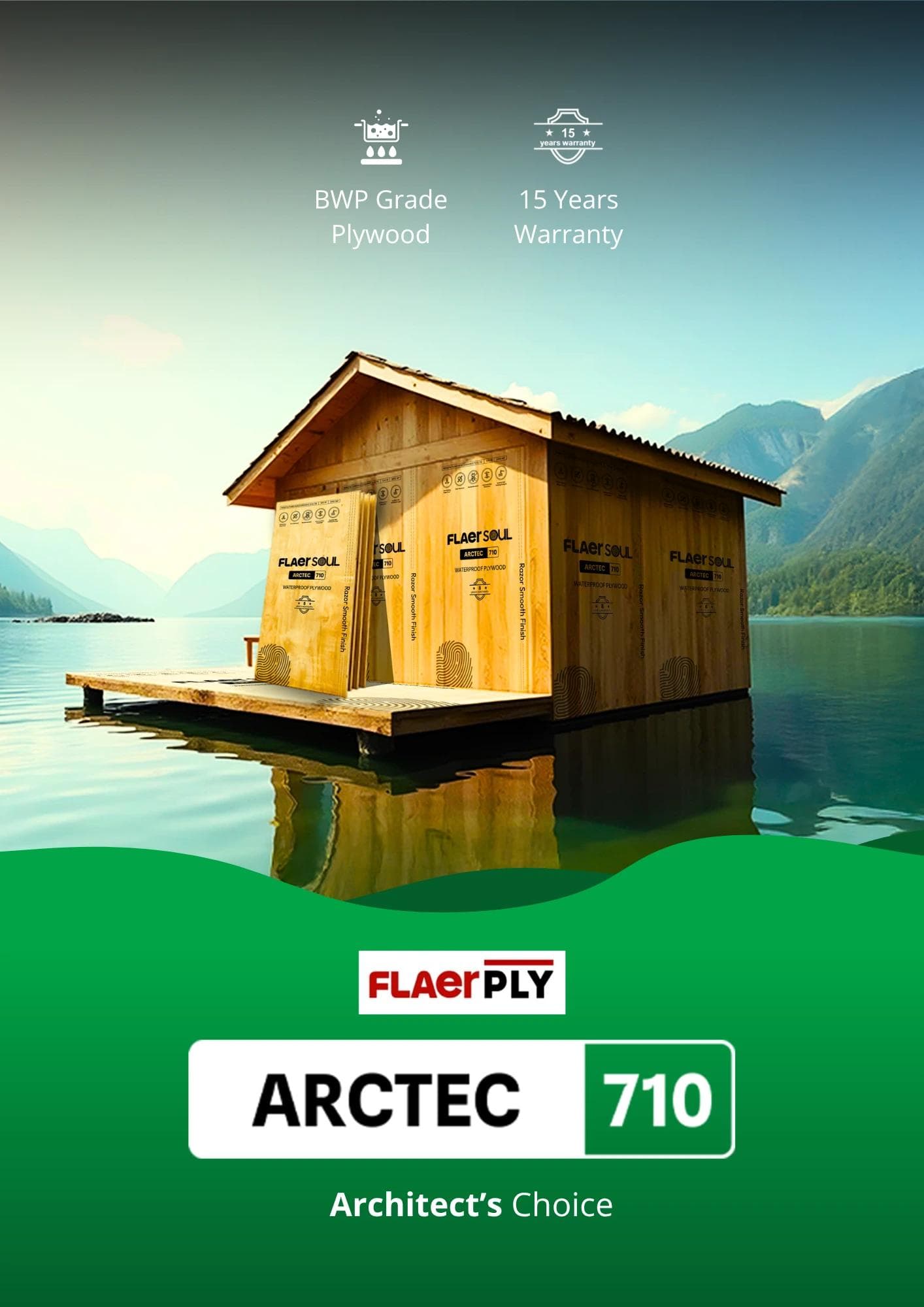
FlaerPly's marine-grade range includes FlaerPly Smart 710 and FlaerPly Victor 710, positioned as IS 710 BWP plywood options.
The FlaerPly Pressure Test is an additional quality demonstration highlighting how plywood bonding performs under water pressure.
This helps buyers understand why the quality of adhesive bonding and overall construction matters when selecting plywood for moisture-prone applications.
The Pressure Test complements product evaluation but does not replace BIS certification or standardised laboratory testing.
When comparing Gurjan plywood and BWP plywood, homeowners should look at the complete specification, including wood composition, core quality, bonding, certification and intended use.
Explore FlaerPly's marine-grade plywood range to understand the available options.
Conclusion
Gurjan plywood and BWP plywood are often compared as though they are two different grades. In reality, they describe different aspects of plywood.
Gurjan tells you about the wood used to manufacture the sheet. BWP tells you about its water-resistance performance.
Both can be important, but neither should be evaluated in isolation.
When buying plywood, compare the veneer composition, core construction, bonding quality, BIS certification and suitability for the intended application.
Gurjan tells you what goes into the plywood. BWP tells you what water-resistance requirements it meets.
Explore FlaerPly IS 710 BWP marine-grade plywood to make an informed choice for your furniture and interiors.