Loading…


How do I know if my plywood is original or duplicate?
Updated:
Fake or low-grade plywood is quite common, especially when it’s sold as “BWP” or premium quality. You can’t rely on just one sign, so it’s best to check a combination of things:
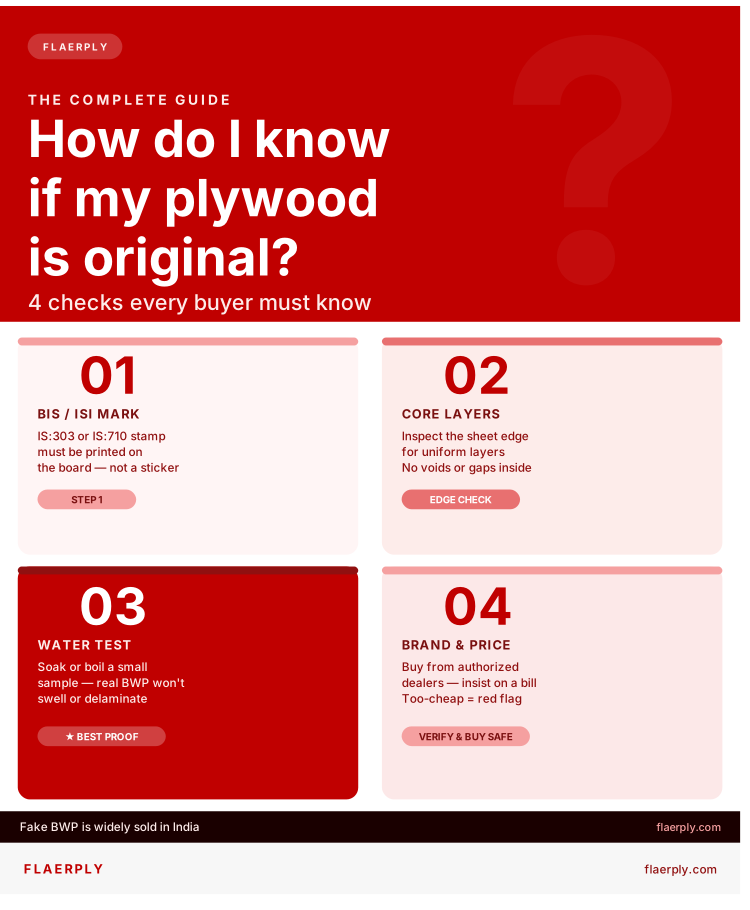
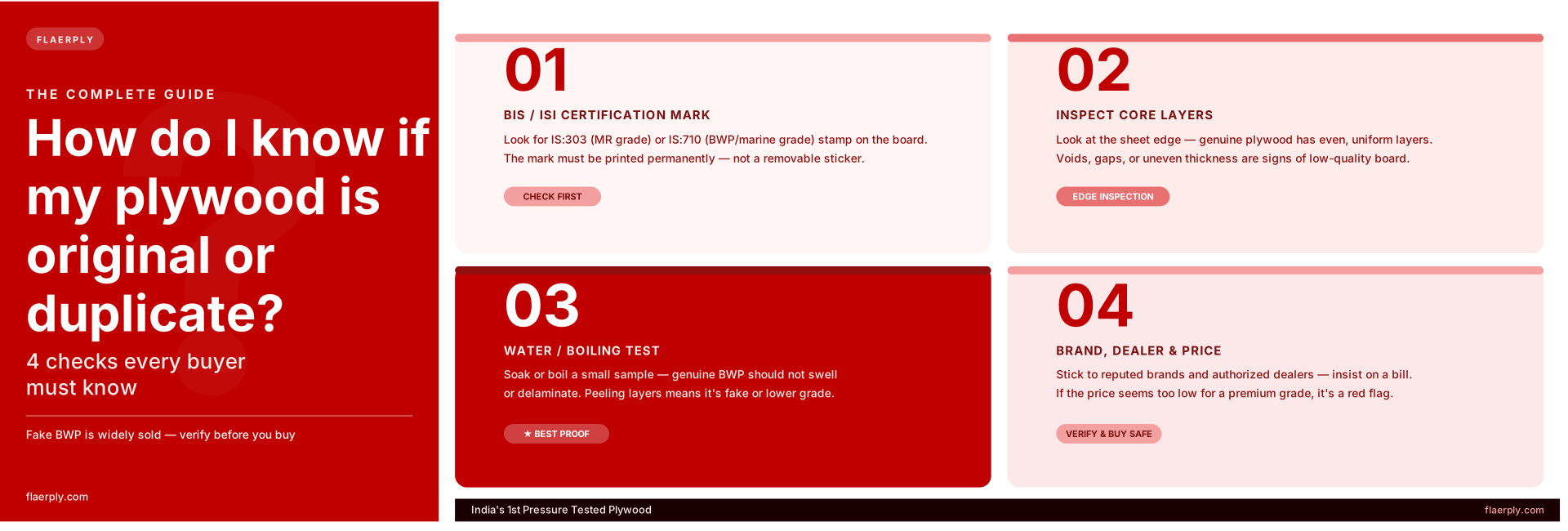
Look for ISI / BIS Certification Mark
Genuine plywood in India should have a BIS (ISI) stamp
For example:
IS:303 → MR grade
IS:710 → BWP (marine grade)
The stamp should be clear, permanent, and printed on the board, not just a sticker
If there’s no proper marking or it looks easily removable, that’s a red flag.
Check the Core Layers
Look at the edge of the sheet
Good plywood will have:
Even, uniform layers
No gaps or overlaps
Fake/low-quality boards often show:
Voids (empty spaces inside)
Uneven thickness
Simple Water Test (Not recommended)
Carpenters and Shop owners prefer and recommend this method as it takes 3 days to test and most of the customers never do this. The process is as follows:
Cut a small sample piece and soak it in water for 3 days
BWP plywood should:
Not swell much
Not delaminate (layers shouldn’t separate)
If layers start peeling, it’s not true BWP
Drawback of this test : It takes 3 days of continuously monitoring and it is mostly done by the shop owner or the carpenter themselves. They can come and conclude the results without even doing this test.
FlaerPly's Pressure Test (This is the fastest test and takes only 15 min)
FlaerPly is India's First Pressure Tested plywood and this process can be applied to test any grade of plywood.
Real BWP plywood should withstand pressure test while the local ones start cracking or peeling within few minutes.
If it cracks, bubbles, or separates → it’s fake or lower grade
Smell Test
Strong chemical or pungent smell may indicate poor adhesive quality
Good plywood has a mild wood smell, not overpowering chemicals
Price Check
If the price is too low compared to market, it’s likely:
Not original
Or downgraded quality being sold as premium
Conclusion
To make sure your plywood is original, don’t rely on just the label—verify it using FlaerPly's Pressure Test. Check for a proper BIS (ISI) stamp (IS:303 for MR, IS:710 for BWP), inspect the internal layers for uniformity, and, if possible, test its water resistance.


