Loading…


What is plywood made of? How is it made?
Updated:
Plywood is an engineered wood product made from thin layers of wood veneers that are glued together. The manufacturing process involves several steps to produce a strong, stable, and versatile panel.
Raw Materials
Wood Logs/Peeler Logs: Typically from fast-growing species (eucalyptus, poplar) for core veneers and premium species (Gurjan, teak) for face veneers.
Adhesive/Resin: Urea Formaldehyde (UF) for MR grade; Phenol Formaldehyde (PF) for BWP grade.
Face Veneers: Thin decorative slices from premium wood for the outer surfaces.
Step 1 – Veneer Production
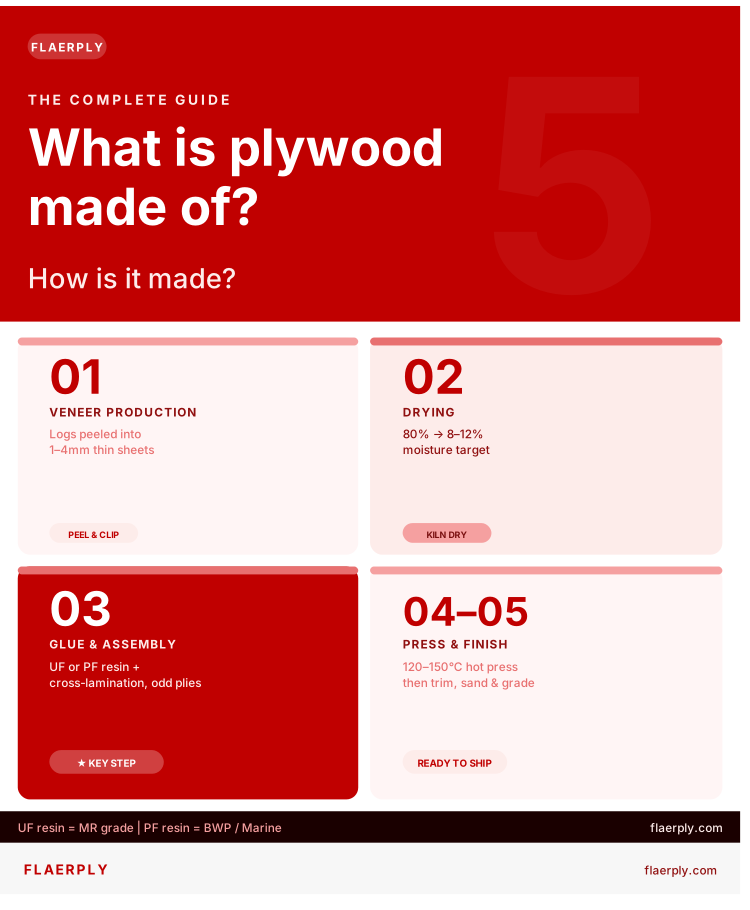
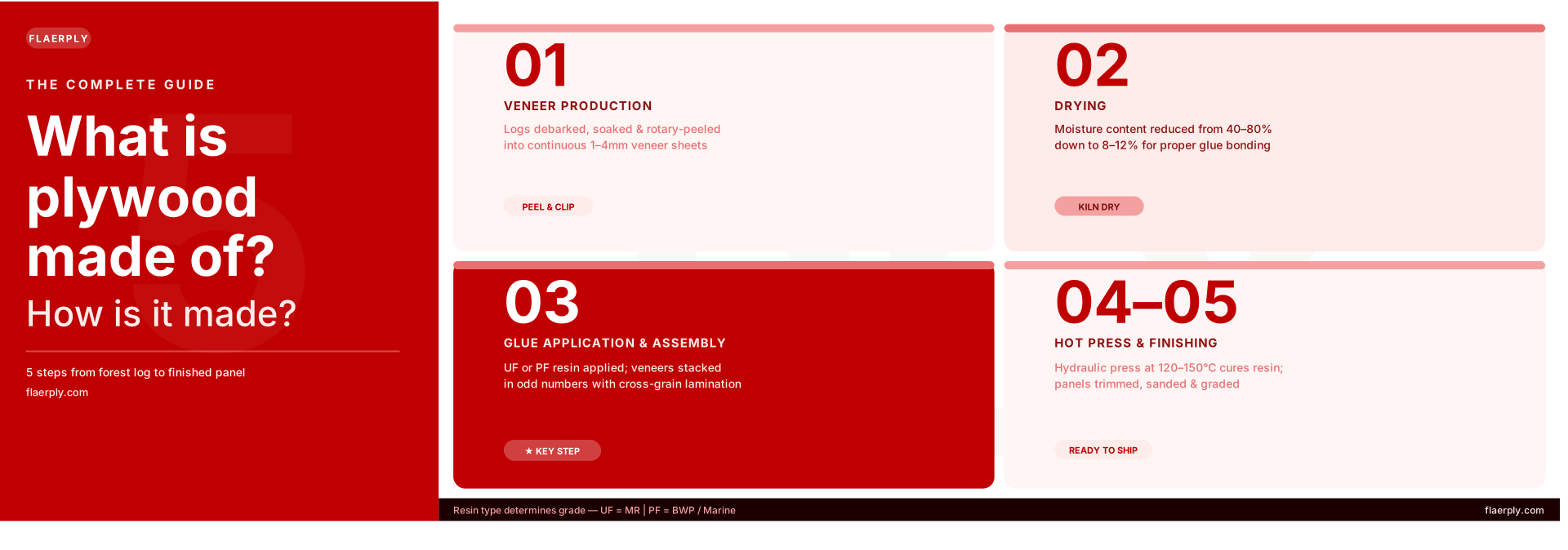
Logs are debarked and conditioned (soaked in water or steamed for softening). They are then rotary peeled into continuous thin sheets (veneers) 1–4mm thick using a peeling lathe. These sheets are clipped to the required size.
Step 2 – Drying
Freshly peeled veneers have high moisture content (40–80%). They are dried in large dryers to reduce moisture to 8–12% to ensure proper glue bonding.
Step 3 – Glue Application & Assembly
Adhesive (UF or PF resin) is applied to the veneers. Veneers are assembled in odd numbers with alternating grain directions (cross-lamination). The stack is cold-pressed to bond layers together.
Step 4 – Hot Pressing
The glued assembly goes into a hydraulic hot press at high temperature (120–150°C) and pressure for curing the resin and forming a strong bond.
Step 5 – Finishing
After pressing, panels are trimmed to standard sizes, sanded smooth, and graded. They undergo quality checks before being branded and dispatched.
Conclusion
Plywood is made from layered wood veneers bonded with adhesive under heat and pressure. The type of resin and quality of veneers determine whether the resulting plywood is MR, BWR, BWP or Marine grade.


